
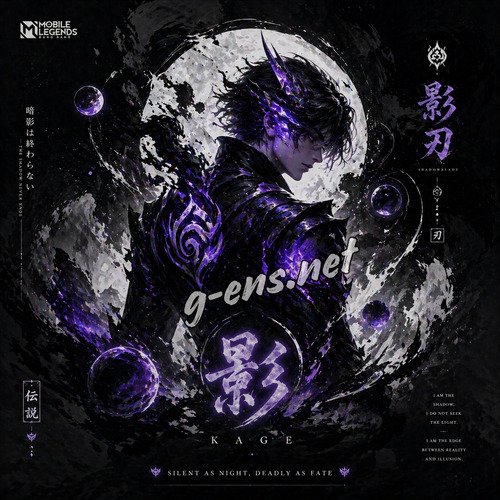
g-ens.net – In Mobile Legends: Bang Bang, heroes are often misunderstood as simple tools of damage or defense. In reality, every hero functions as a tempo controller, influencing how fast the game moves, where fights happen, and who feels comfortable making decisions. At higher levels of play, mechanical skill alone is not enough. The true difference lies in how well players understand pacing, pressure, and psychological control over fights.
This guide focuses on the deeper layer of hero mastery—how heroes shape game tempo, how team fights are mentally constructed before they even begin, and how advanced players turn small advantages into decisive victories through intelligent decision-making.
Tempo Control and the Flow of the Game
Every match in Mobile Legends has an invisible rhythm. Sometimes the game feels fast, with constant fights and rotations. Other times it slows down, with teams farming and waiting for key cooldowns. This rhythm is not random—it is controlled by hero selection, player decisions, and objective pressure.
The early game is where tempo begins to form. Certain heroes naturally dictate faster gameplay because of their ability to pressure lanes, invade jungle areas, or secure early kills. These heroes force reactions from the enemy, which immediately increases the pace of the match.
A strong early-game hero does not simply win lanes; they create discomfort. When an opponent is forced to play defensively, they lose agency over rotations and map control. This is why early aggression is not just about kills but about restricting options. Even without securing eliminations, consistent pressure can force enemies to miss minion waves, delay rotations, or abandon jungle camps.
Lane pressure also determines where the game will be played. If one side dominates side lanes, the battlefield shifts toward the losing side’s territory. This creates a natural imbalance where one team constantly defends while the other dictates movement. Tempo begins here, not in team fights but in wave control and positioning discipline.
Mid Game Rotation Windows and Power Spikes
The mid game is where tempo becomes most dynamic. Heroes begin unlocking core items, enabling new combat patterns and rotation potential. This stage is defined by timing windows—moments when certain heroes become significantly stronger than others.
A well-timed rotation during a power spike can completely shift momentum. For example, when a damage dealer completes a core item, the team can suddenly contest objectives more aggressively. However, if this timing is missed, the advantage disappears as enemies catch up in farm and positioning.
Rotation decisions in the mid game are often about choosing between risk and control. Moving as a group can secure objectives, but it also sacrifices lane pressure. Staying split preserves resources but risks being picked off. The best players constantly evaluate whether the current tempo favors aggression or stability.
Another important aspect is how quickly teams respond to map changes. Fast rotations increase tempo, forcing enemies into reactive gameplay. Slow responses allow opponents to reset and regain control. This constant push and pull defines the mid game more than any individual fight.
Late Game Stalling and Controlled Escalation
Late game tempo slows down again, but in a more dangerous way. Every mistake becomes more punishing, and every fight has the potential to end the match. At this stage, heroes are fully built, meaning raw power differences shrink and decision-making becomes the primary factor.
Teams often shift into controlled escalation—slowly increasing pressure without fully committing. This involves pushing lanes carefully, controlling vision, and forcing enemies to reveal themselves before engaging. The goal is not to rush but to create inevitable situations where the enemy must respond poorly.
Stalling is also a valid strategy in late game scenarios. Teams with weaker scaling often delay fights, waiting for enemy mistakes rather than forcing engagement. This creates psychological pressure on the opposing team, as they must continuously decide whether to push or wait.
Understanding late game tempo is about patience. The team that loses discipline first usually loses the match, even if they are mechanically stronger.
Team Fight Psychology and Decision Triggers
Team fights in Mobile Legends are often viewed as mechanical events, but they are actually psychological battles that begin long before the first skill is used. Every movement, positioning choice, and cooldown usage contributes to shaping the mental state of both teams.
Initiation is not just about starting a fight—it is about creating fear zones. Certain heroes can threaten engagement at any moment, forcing enemies to play cautiously. This psychological pressure is often more valuable than the initiation itself.
When a tank or initiator positions aggressively, enemies must constantly respect the possibility of engagement. This reduces their ability to farm, poke, or rotate freely. Even without committing, the initiator controls space simply through presence.
Fear zones also affect positioning errors. Players who feel threatened tend to spread out too much or stay too far back, which reduces their team’s effectiveness. This creates gaps in formation that can be exploited later.
A well-executed initiation is usually not sudden—it is the result of accumulated psychological pressure. By the time the fight begins, enemies are already positioned incorrectly or have wasted cooldowns defensively.
Cooldown Tracking and Fight Timing Recognition
High-level fights are heavily influenced by cooldown awareness. Every hero has key abilities that define their combat effectiveness. Once these abilities are used, there is a temporary window of vulnerability.
Skilled players constantly track enemy cooldown usage, even subconsciously. When a critical skill is missing, it creates a trigger for engagement. This is why fights often break out immediately after key abilities are used defensively.
Timing recognition is about identifying these windows quickly. For example, if an enemy uses a mobility skill to escape, they become vulnerable for a short duration. This is the moment where assassins or burst heroes can engage safely.
On the other hand, engaging too early—before cooldowns are spent—often results in losing fights. Proper timing ensures that engagements happen when the enemy is least capable of responding effectively.
Cooldown tracking also applies to your own team. Engaging without key abilities can be just as dangerous, making timing awareness a shared responsibility.
Target Prioritization and Mental Collapse of Fights
Once a fight begins, target selection becomes the most important decision. Not all enemies are equal in value during a fight. Removing the right target at the right time can instantly collapse the enemy formation.
High-value targets are usually damage dealers or utility heroes that enable team coordination. Eliminating them first reduces enemy damage output and disrupts their ability to respond.
However, target prioritization is not always straightforward. Sometimes the most accessible target is not the most important one. Advanced players evaluate risk versus reward in real time, deciding whether to dive deep or secure a safer elimination.
When a key hero is eliminated early, the mental structure of the fight changes. The losing team often becomes disorganized, hesitating between retreating or continuing to fight. This hesitation creates further openings for cleanup.
Team fights are not just about damage—they are about breaking enemy confidence and coordination through precise elimination sequencing.
At the highest level of play, hero mastery is defined by execution under pressure and the ability to adapt strategies mid-game. Mechanical skill is only one part of this equation; decision-making flexibility is equally important.
Combo Fluidity and Adaptive Mechanics
Every hero has optimal combos, but rigid execution often fails in real matches. Enemies are unpredictable, and situations rarely unfold exactly as planned. This is why combo fluidity is more important than memorized sequences.
Fluid execution means adjusting ability usage based on positioning, enemy movement, and team coordination. Instead of following a fixed pattern, players react dynamically to the battlefield.
For example, an assassin may intend to engage with a full combo but must instead adjust mid-fight due to enemy crowd control or unexpected positioning. The ability to adapt without hesitation determines success in chaotic situations.
Adaptive mechanics also include canceling actions, repositioning mid-combo, or switching targets based on priority changes. These micro-adjustments often decide whether a kill is secured or wasted.
Item Adaptation and Real-Time Build Shifts
Itemization is not static. While pre-planned builds provide structure, real matches require continuous adjustment. Every enemy composition demands different defensive or offensive responses.
If enemies become too burst-heavy, defensive items must be prioritized earlier than planned. If healing becomes a problem, anti-regeneration items must be introduced quickly. Ignoring these adjustments often leads to being overwhelmed in mid-to-late game fights.
Real-time build shifts also reflect game awareness. Players who adapt quickly to enemy strengths show deeper understanding of match flow. This flexibility often compensates for mechanical disadvantages.
Item adaptation is not just about survival—it is about maintaining relevance. A properly adjusted build ensures that a hero remains effective even in unfavorable conditions.
Decision Fatigue and Endgame Consistency
As matches extend into late stages, decision fatigue becomes a hidden factor. Players begin making slower or less accurate decisions due to prolonged concentration demands. This is where consistency becomes more important than highlight plays.
Heroes that require less mechanical complexity often perform better in these situations because they allow players to focus more on macro decisions. Conversely, high-execution heroes may lose effectiveness if fatigue reduces precision.
Maintaining consistency requires discipline in positioning, timing, and objective focus. Instead of forcing complex plays, experienced players prioritize stable decisions that reduce risk.
Endgame consistency is often what separates average players from high-level competitors. It is not about doing more—it is about doing less, but with perfect timing and clarity.
Conclusion Mobile Legends Hero Mastery: Tempo Control, Fight Psychology, and High-Level Decision Making
Hero mastery in Mobile Legends goes far beyond mechanical execution or understanding basic roles. It is a layered system of tempo control, psychological pressure, timing awareness, and adaptive decision-making. Every hero contributes not just through abilities, but through how they influence the pace and structure of the match.
Successful players understand that games are won through rhythm control—knowing when to accelerate, when to slow down, and when to force or avoid conflict. They recognize that team fights are not isolated events but psychological sequences built through positioning, cooldown tracking, and pressure application.
Ultimately, mastering heroes means mastering the flow of the game itself. When you understand how tempo, psychology, and adaptation interact, every hero becomes more than a character—they become a strategic instrument capable of shaping the entire battlefield.
